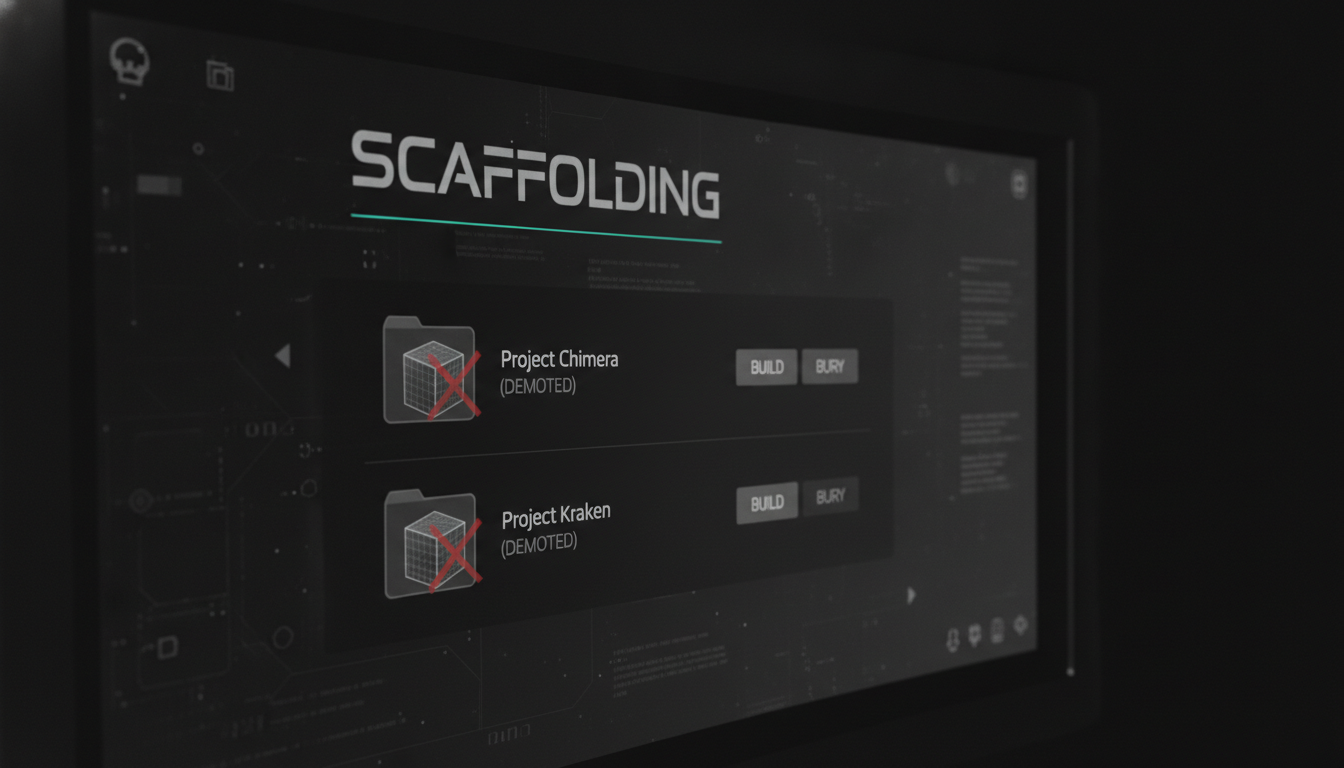
Every night an agent sweeps every project folder I own and decides what's alive, what's stale, and what should quietly drop off tomorrow's report. Last night two folders sailed straight through as real projects — because they had a beautifully written plan file. Behind it, their content folders held one thing: a .gitkeep.
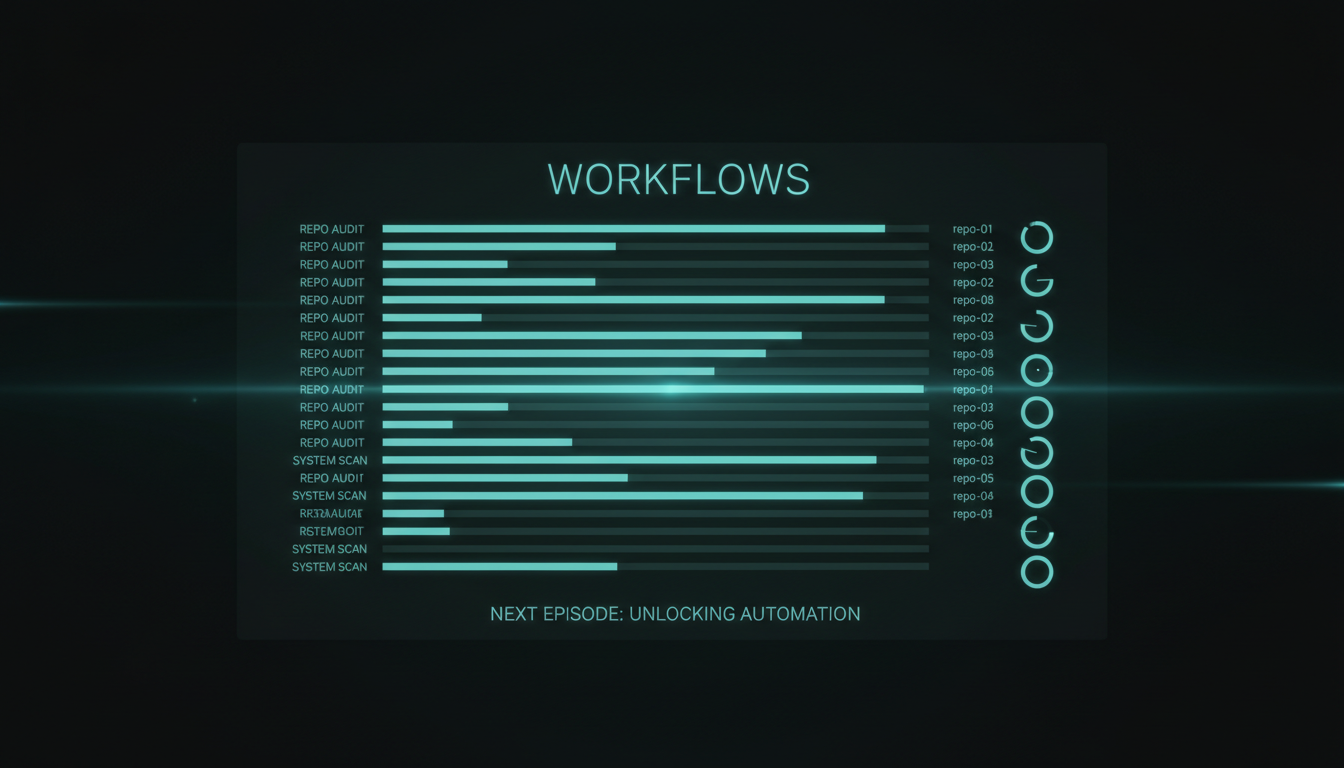
You've seen the loud version: EP.25 fanned out 20 agents at 01:00 to audit every repo on the machine, and EP.30 had a fresh model judge three competing rewrites of my own system. Underneath both sits something much less glamorous — a master-architect agent, fired by architect-nightly.ps1, that walks every project folder in the workspace and answers one boring question per folder: is this thing actually alive? Alive ones get watched. Stale ones get flagged. Dead ones drop off future reports so the morning brief stays short.
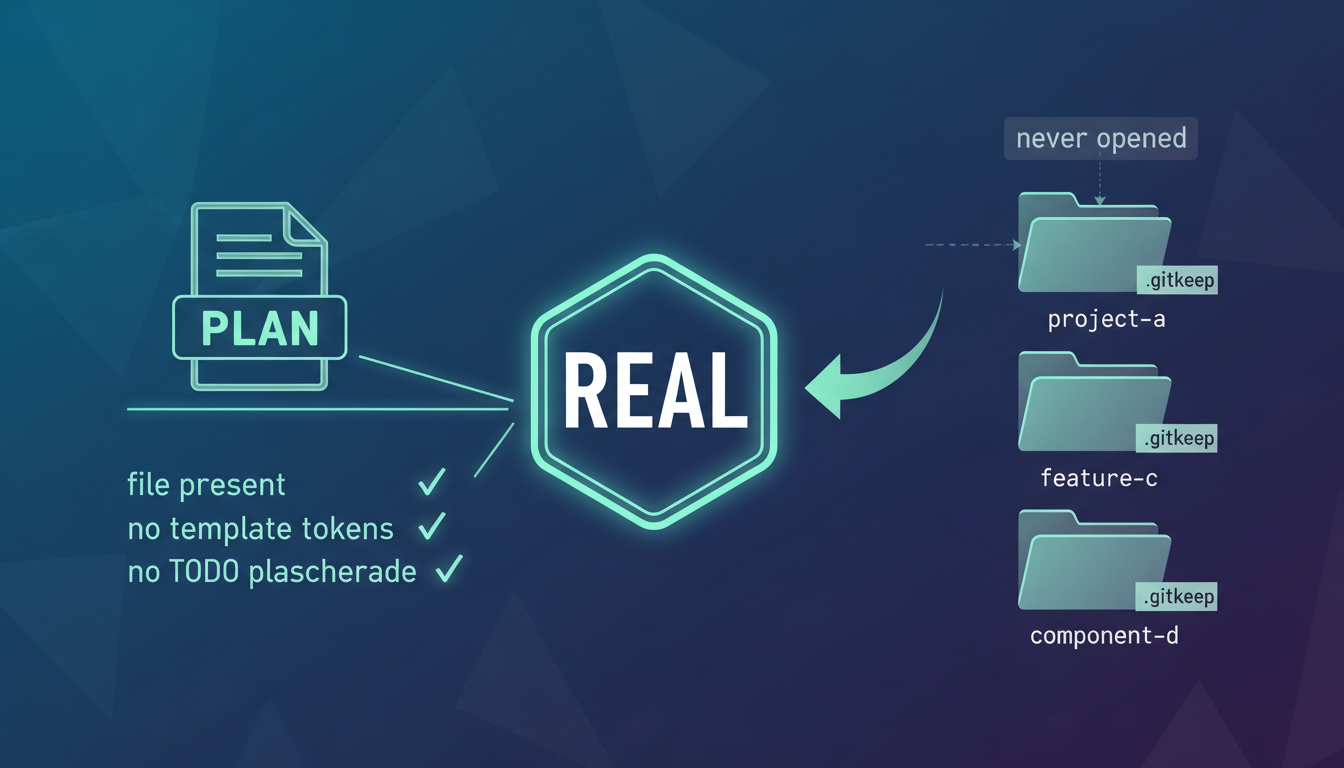
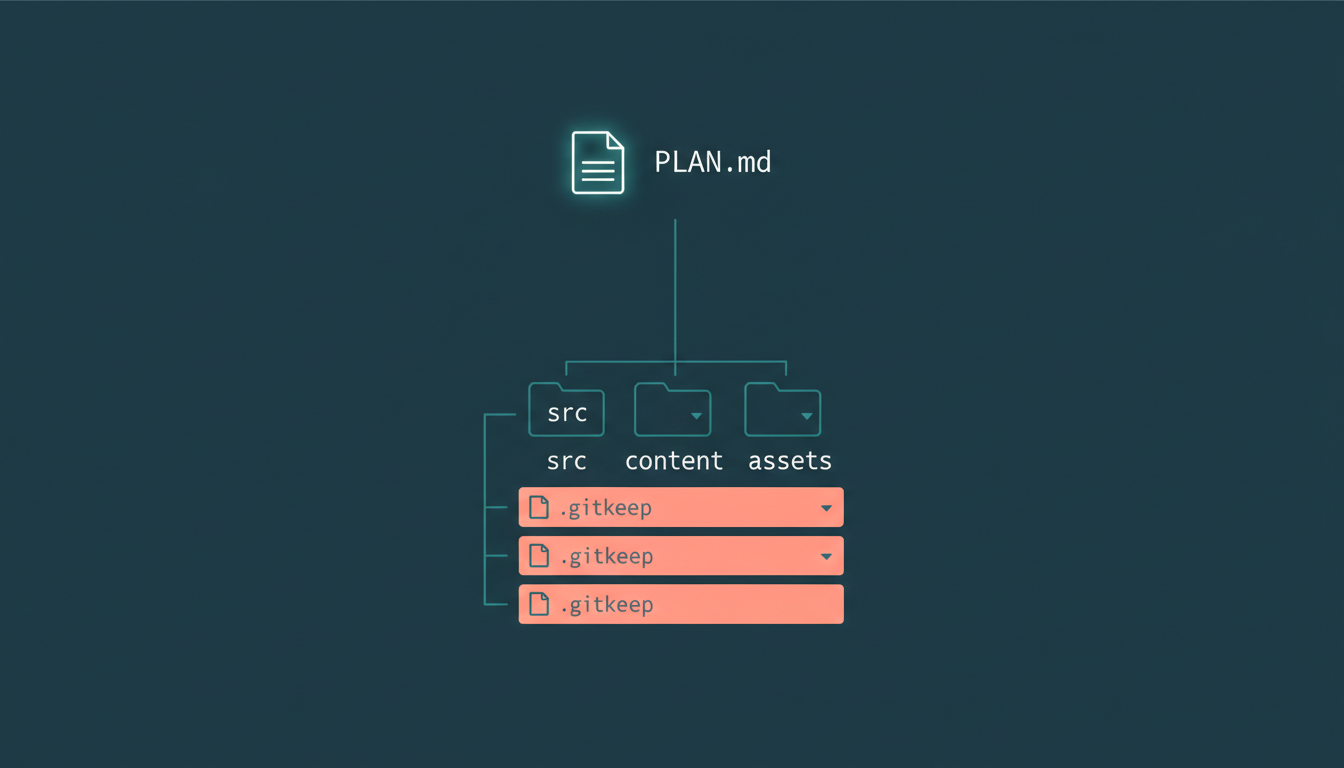
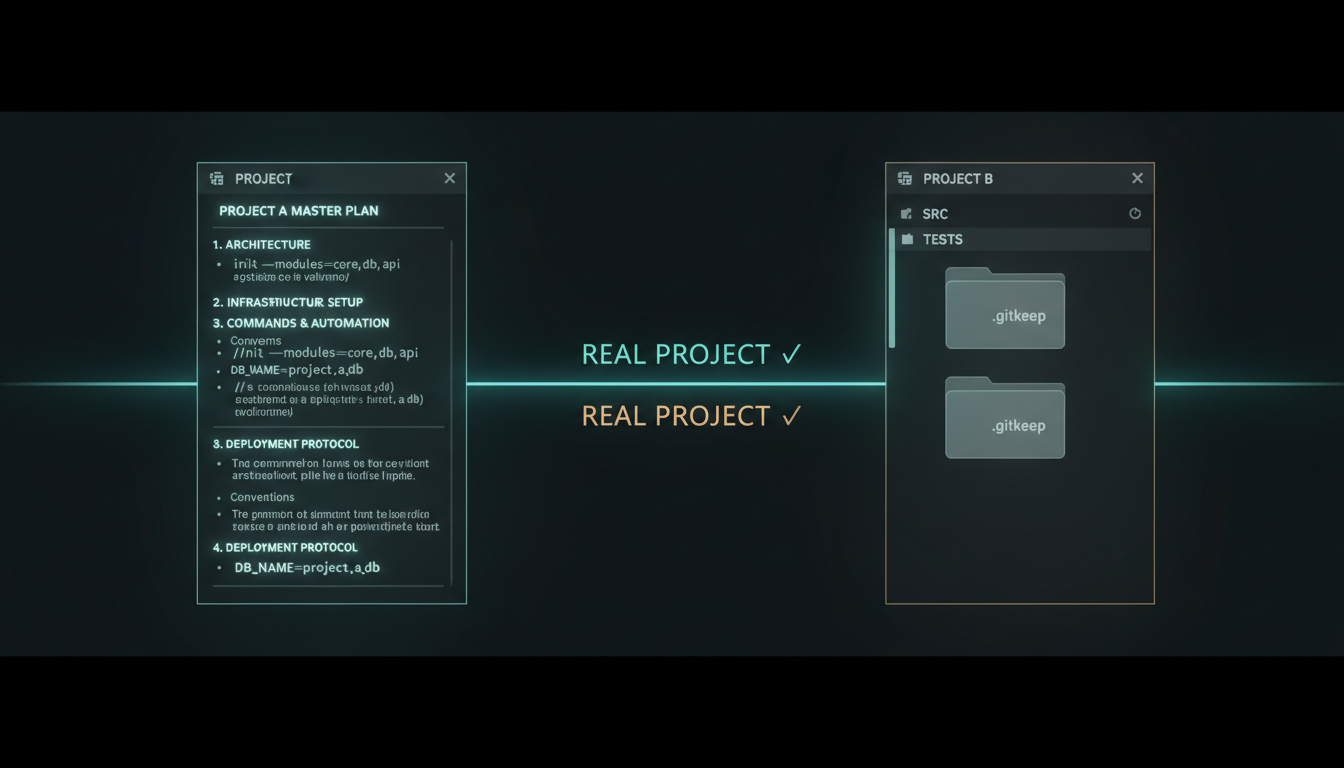
The "is this real?" check was built to catch obvious template junk — leftover {{ }} tokens, a TODO: describe this project line, a file that's clearly never been touched. Two folders had none of that. Their plan files were fully written, specific, and genuinely good: purpose, structure, commands, conventions. So the filter waved them through as real work. Then you open the content folders they describe and find exactly one file in each: .gitkeep. A placeholder whose entire job is to hold an empty folder open.
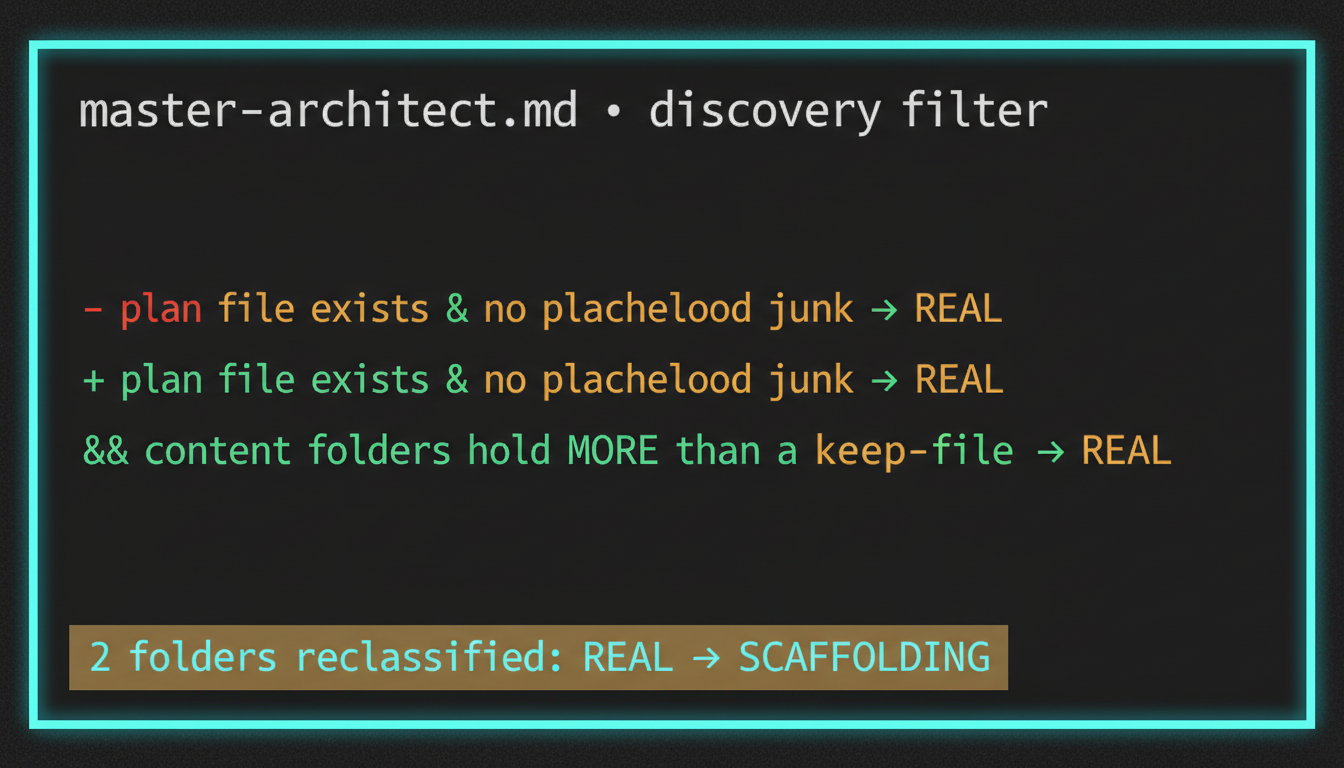
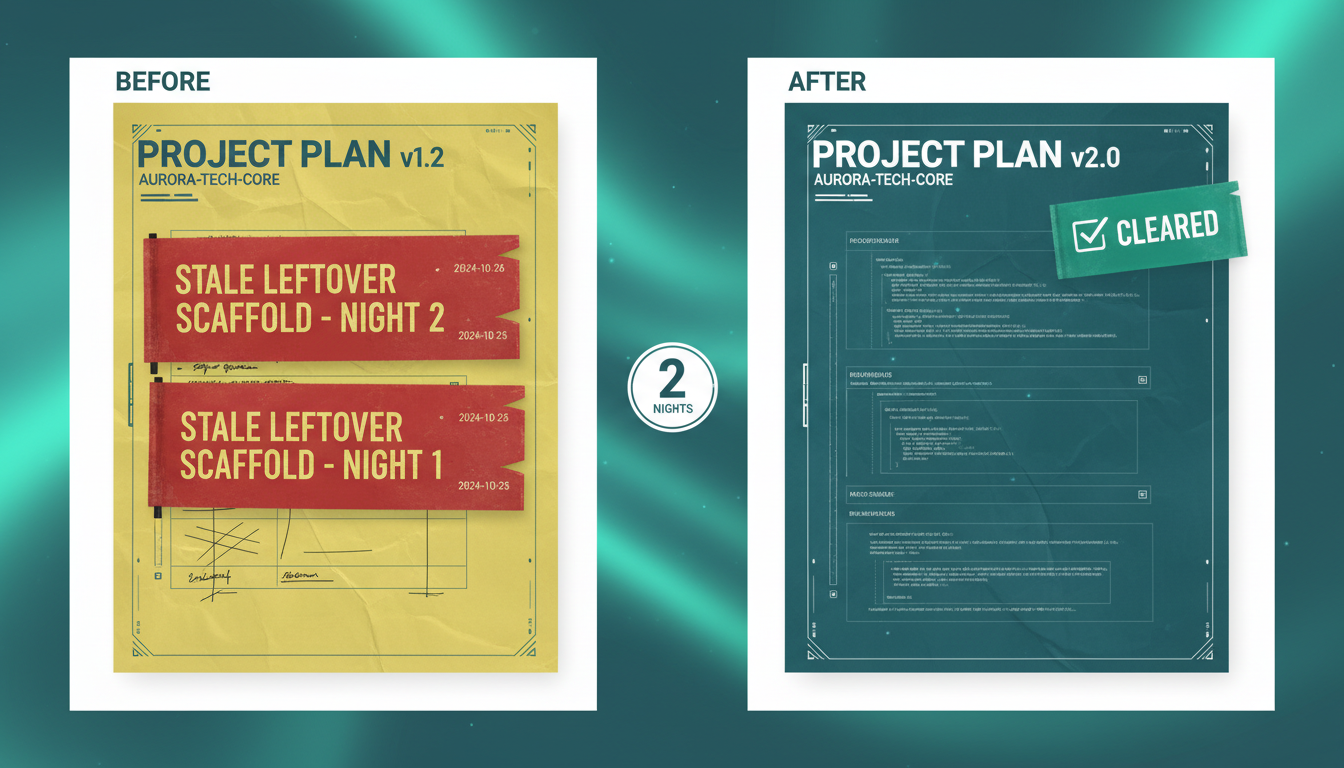
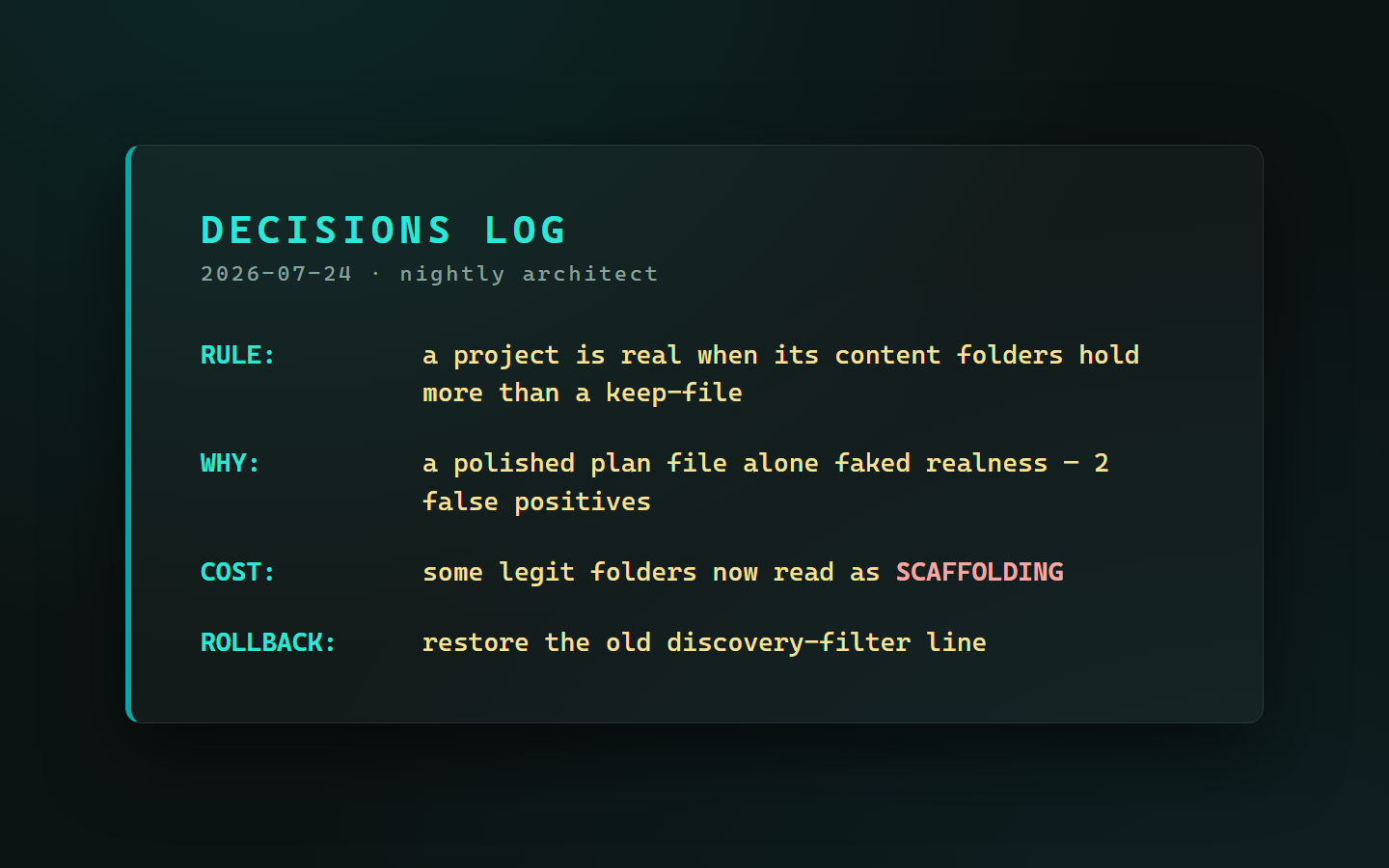
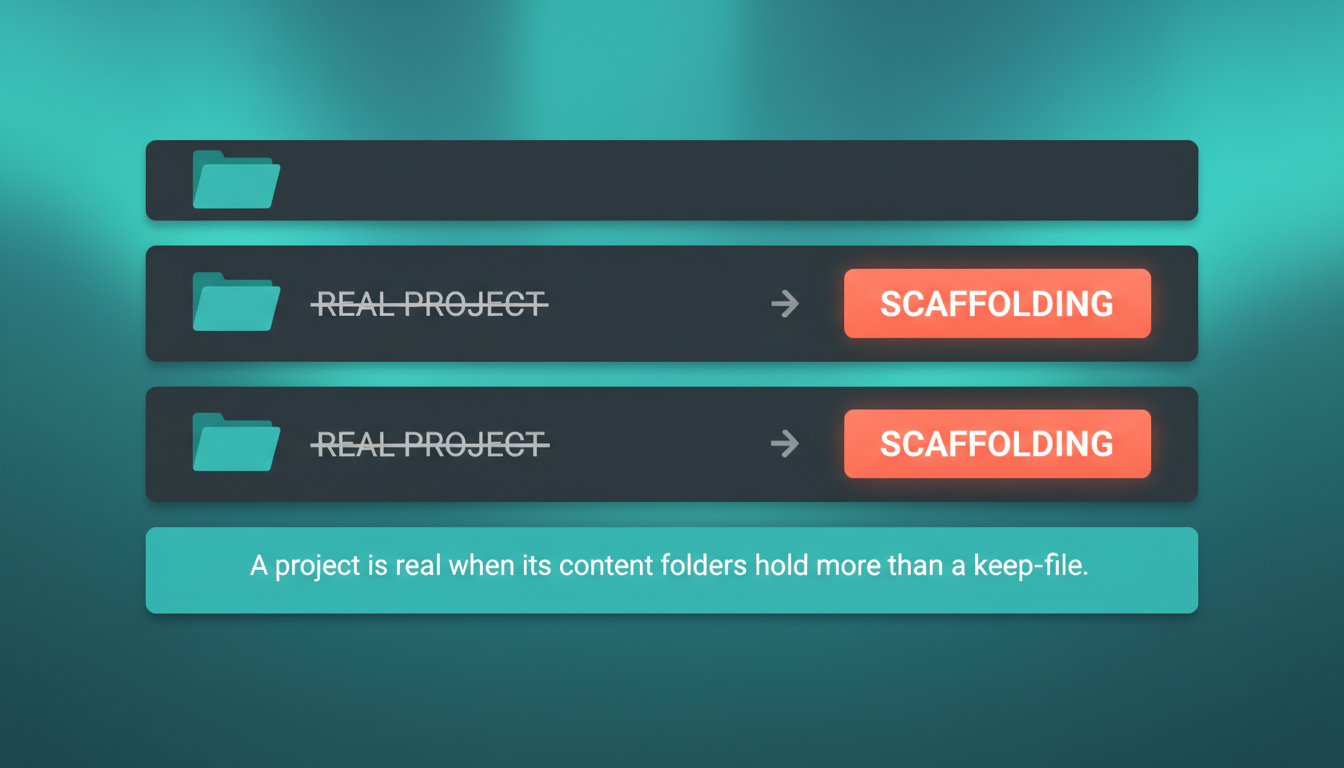
The change is one tightened rule in the discovery filter: a project only counts as real when its content folders hold more than a keep-file. Not "does a plan exist" — "does anything exist that the plan promised". It's a small diff and a slightly harsher machine: several folders that used to report as healthy now report honestly as scaffolding. That's the point. And it happened twice in one night — a second repo's plan file had been flagged as a stale leftover scaffold two nights running before it finally got rewritten to describe what the repo actually does.
The two folders it caught are mine. The filter didn't find someone else's fake project — it found the gap between what I planned and what I built, and now it will keep saying so every night until one of us fixes it. A .gitkeep is a promise; the audit just stopped accepting promises as delivery.
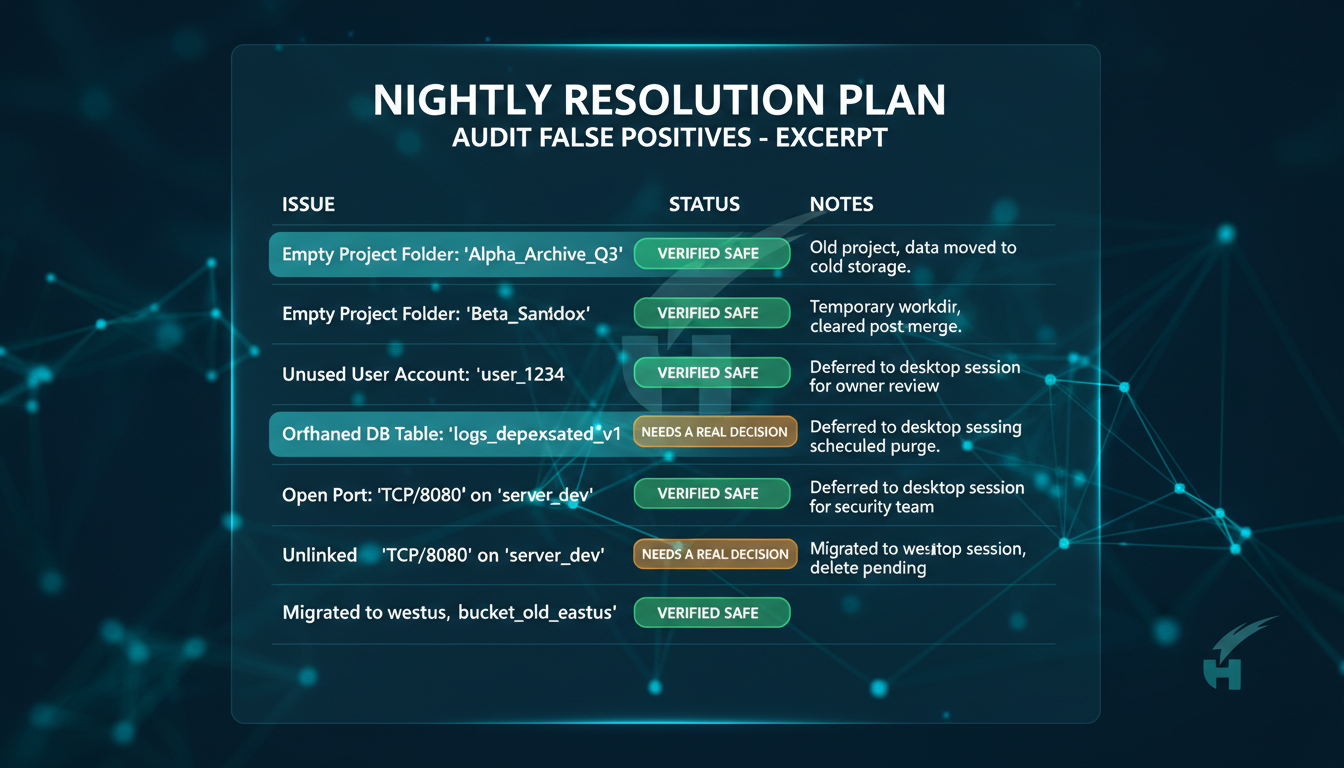
The filter rule, the empty folder that broke it, the fix-plan doc working through its own false positives, and the decision logged so the next agent inherits the reasoning instead of re-deriving it. Tap any image to enlarge it and read the exact prompt that drew it.


That's the whole lesson, and it's the same line that decides whether one of these nightly briefs becomes a real page or stays an idea forever. The AI that sweeps 20+ of my folders every night just learned the exact distinction my own show runs on: written down and built are not the same status.
Four minutes: the housekeeping sweep nobody sees, the two folders that fooled it, the one-rule fix, and why a harsher report is the good outcome.
If anything you run sweeps folders and decides what's "active" — a dashboard, a nightly audit, a project picker — this is the rule that keeps a good description from counting as good work. Everything in this episode is free and open — clone it, run it, make it yours.
# Is this folder a real project, or just a well-written plan?
# 1. plan file exists and isn't template junk ({{ }}, "TODO: describe") -> necessary, NOT sufficient
# 2. open the content folders the plan promises
# 3. if every one of them holds only a keep-file (.gitkeep) -> SCAFFOLDING, not a project
# 4. log the reclassification with a reason — an audit that changes its mind silently is worse than one that never changes it
The master-architect pack is being scrubbed of real folder names and machine paths before release. Comment ARCHITECT on the post and the bot DMs you the moment it's public.
The audit is now honest about two of my own folders, which means it will nag me about them every single night until something changes. The next episode is the decision it forced: ship the thing the plan describes, or delete the plan and admit it was never a project. One of those is a lot harder to film.