The sharpest moments — a command I didn't know existed, a bug killed in one prompt — happen mid-session and vanish when I close the tab. I already save every Claude Code session to disk. Now an AI reads back through all of them, scores each chunk for novelty, surprise and how well it generalizes, and hands me a pre-qualified backlog of episodes — each one carrying its own source transcript.
The teachable stuff almost never shows up when I'm sitting down to plan content. It happens mid-session: a flag I didn't know existed, a bug fixed in a single prompt, a workflow that genuinely surprised me. By the time I think to film it, it's three sessions back and I can't remember the exact words that made it work. Two months of real AI work was sitting on my machine — and the best episode ideas I never wrote down were buried inside it.
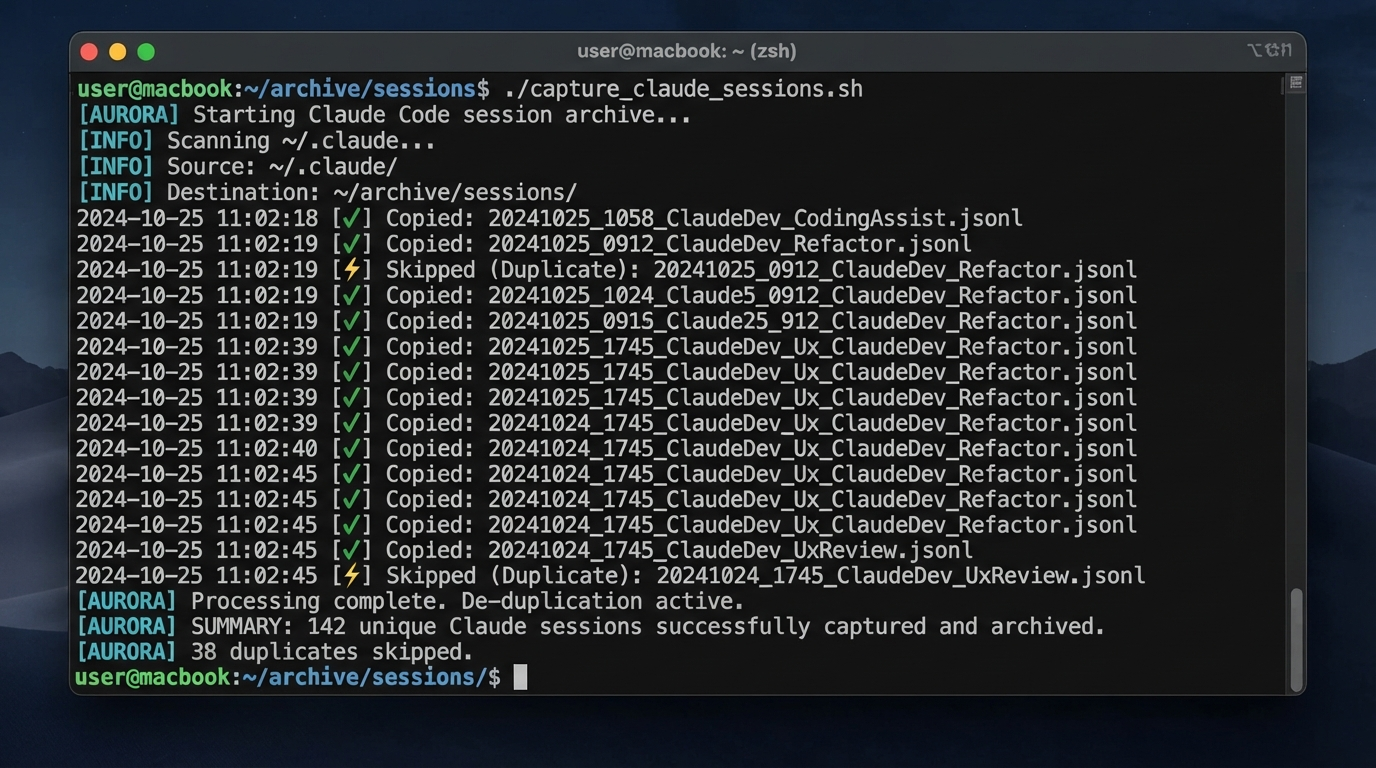
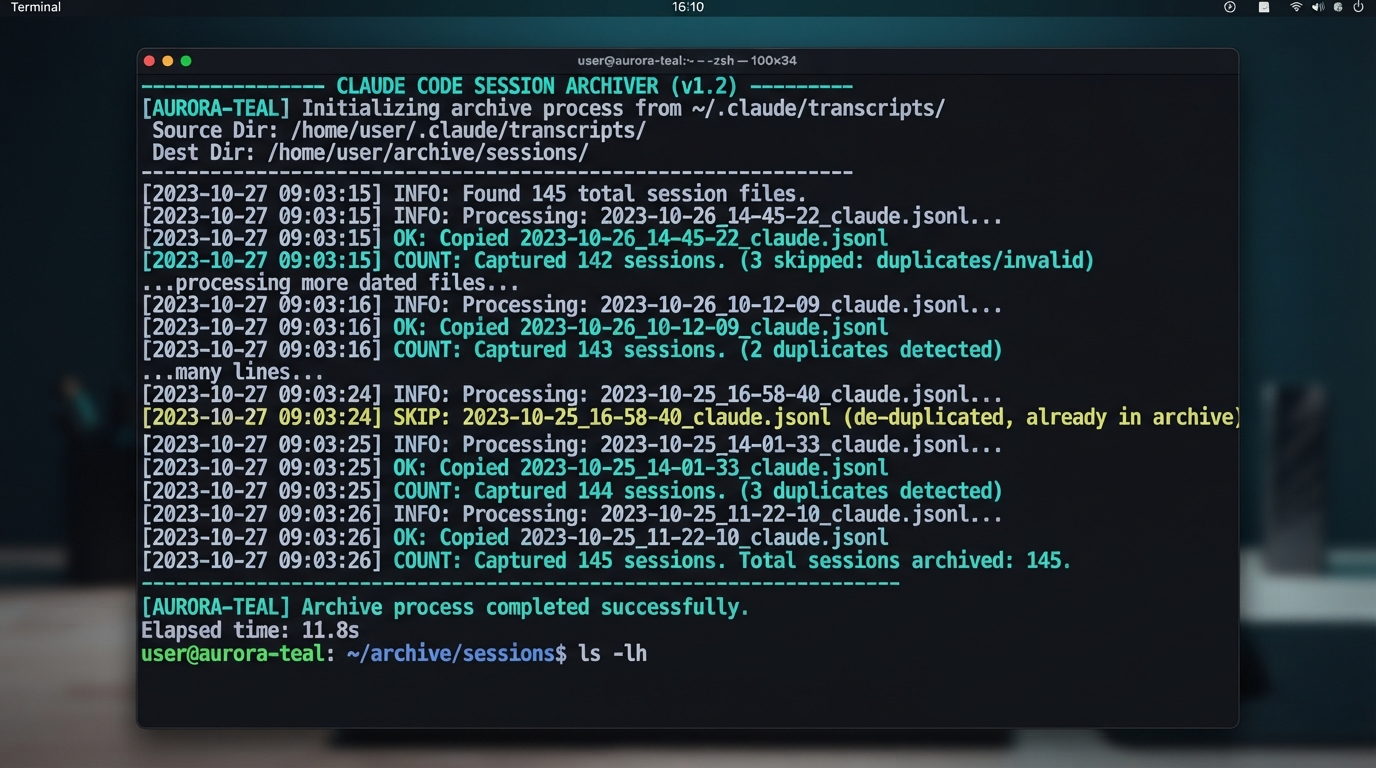
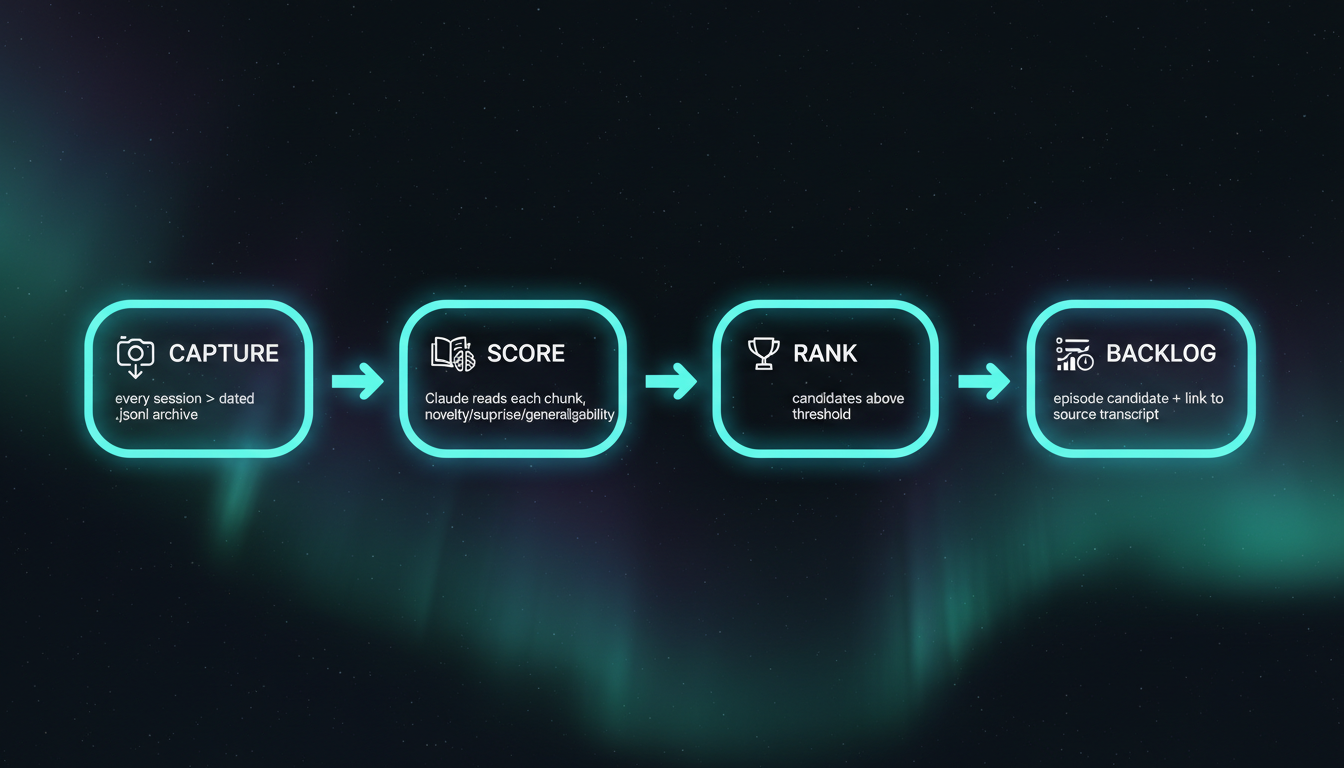
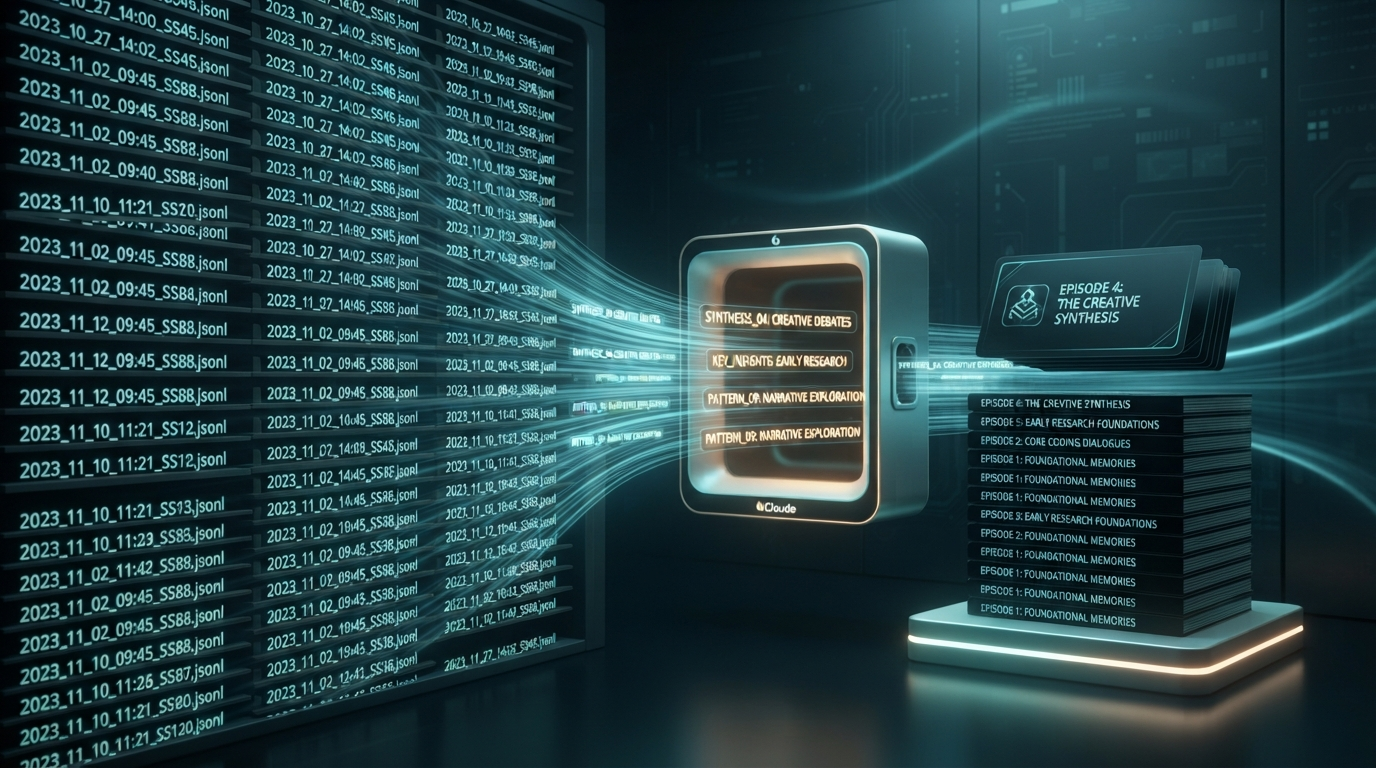
I don't rely on remembering to save anything. A small capture script copies every Claude Code session — the raw .jsonl transcripts the tool writes under .claude — into a dated archive on disk, automatically, every session and not just the ones I think to keep. That part has been running for months. So the corpus already exists: every prompt, every reply, every "wait, that actually worked?" moment, sitting in a folder. The new work isn't capturing it — it's reading it back.
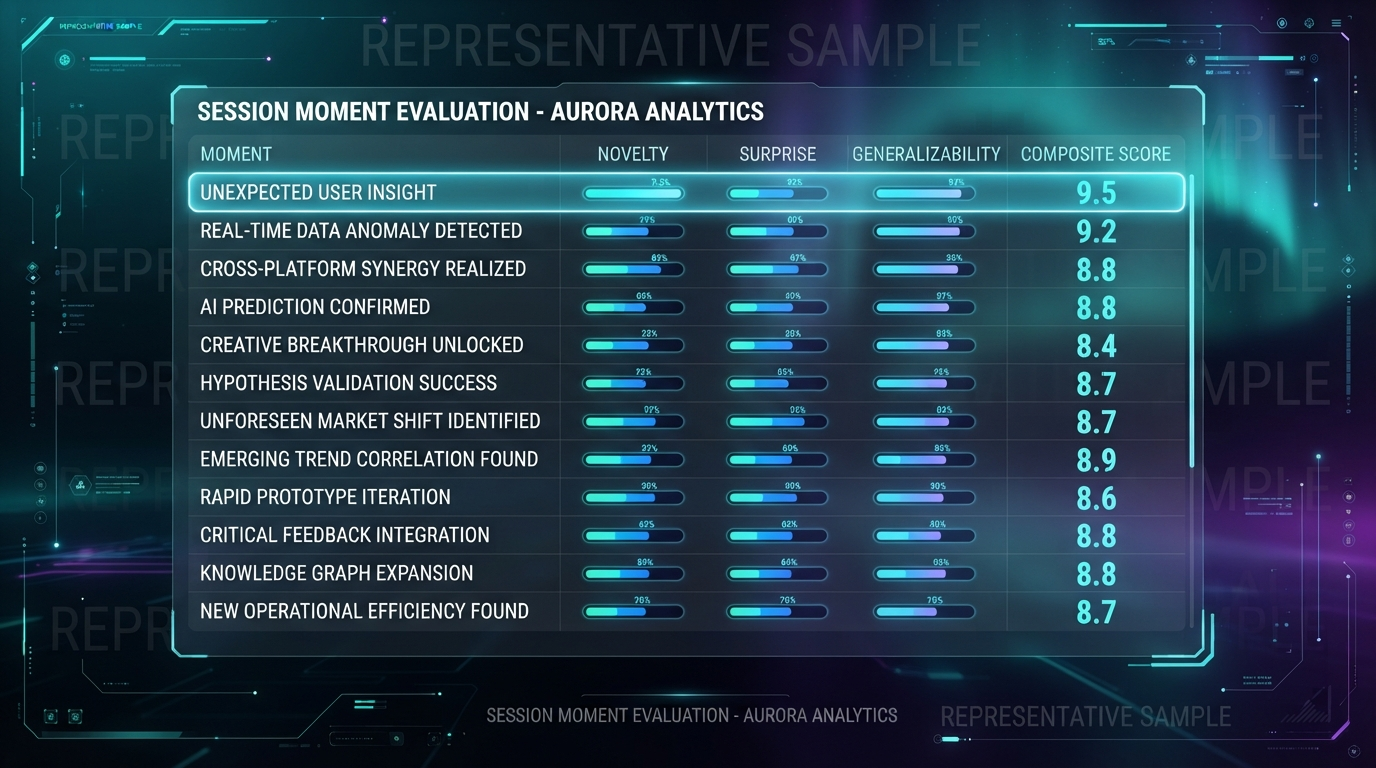
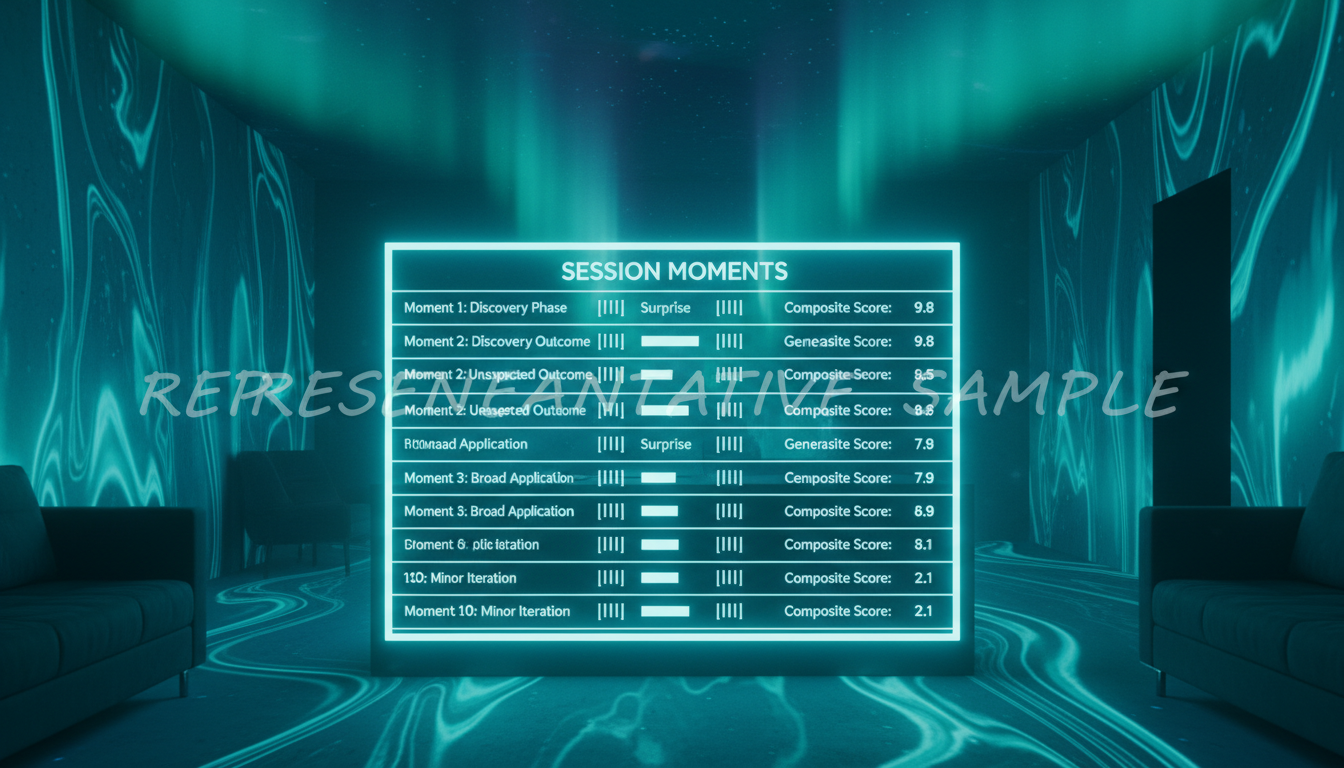
The new layer pipes each archived session through Claude with one job: find the teachable moments and score them on three axes — novelty (did something genuinely new happen?), surprise (did it defy what I expected?), and generalizability (would it help someone who isn't me?). Anything that clears the bar becomes a candidate episode, with a pointer back to the exact session chunk it came from. The honest caveat: the capture is real and running, but this scoring layer is freshly built — the scored table you'll see on this page is a representative mock-up, not the output of a fully validated run. I'd rather show you the shape of it than fake a leaderboard.
The session-capture script has been archiving every conversation for months — that part genuinely runs. The scoring & ranking layer is brand new, and I don't have a clean, fully-validated live run to screenshot yet. So the scored table here is a representative reconstruction of the format, not a real leaderboard. When the scorer has a verified run behind it, I'll swap in the real numbers — until then I'm flagging it rather than dressing a mock-up up as a result.
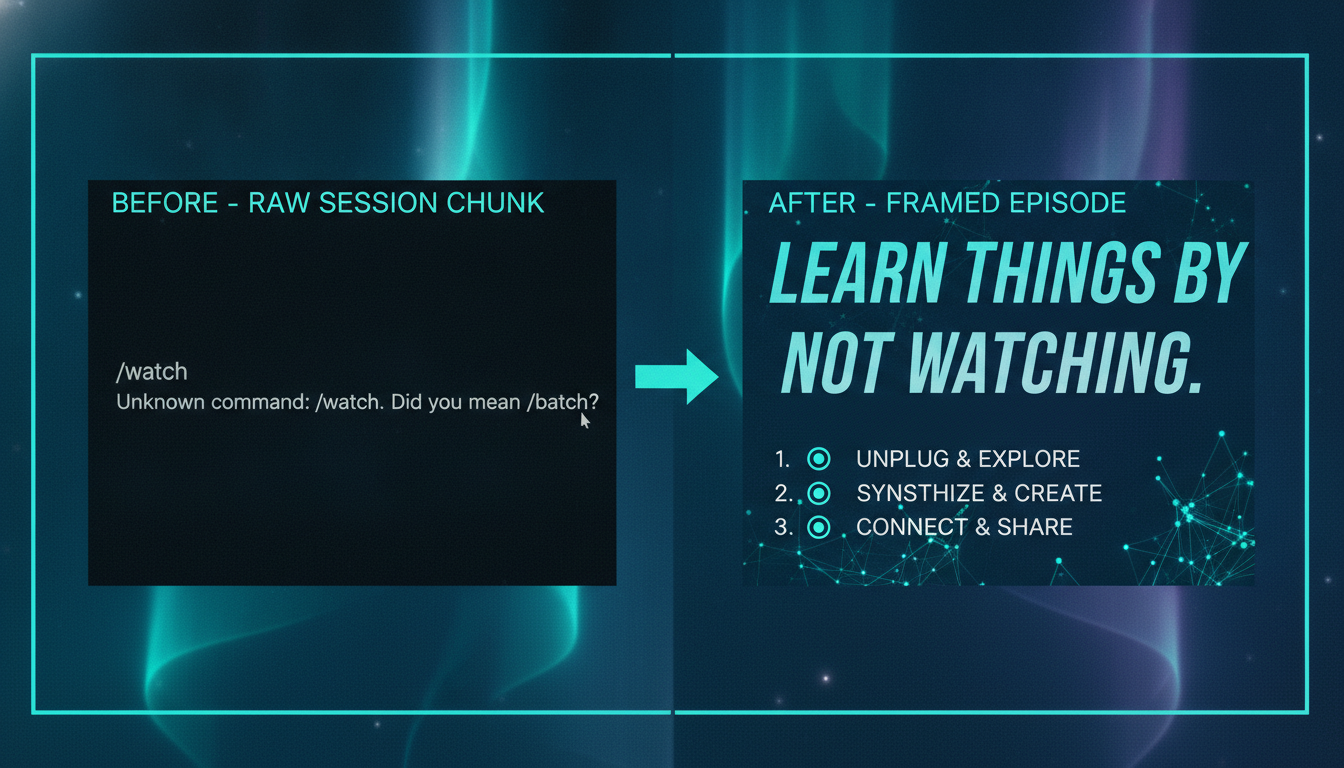
Four pieces of the system: the capture script archiving a session, the scoring pass ranking the moments, the whole pipeline on one diagram, and a real before → after — a raw session chunk where /watch failed, turned into the published "Learn things by not watching" episode. Tap any image to enlarge it and read the exact prompt that drew it.


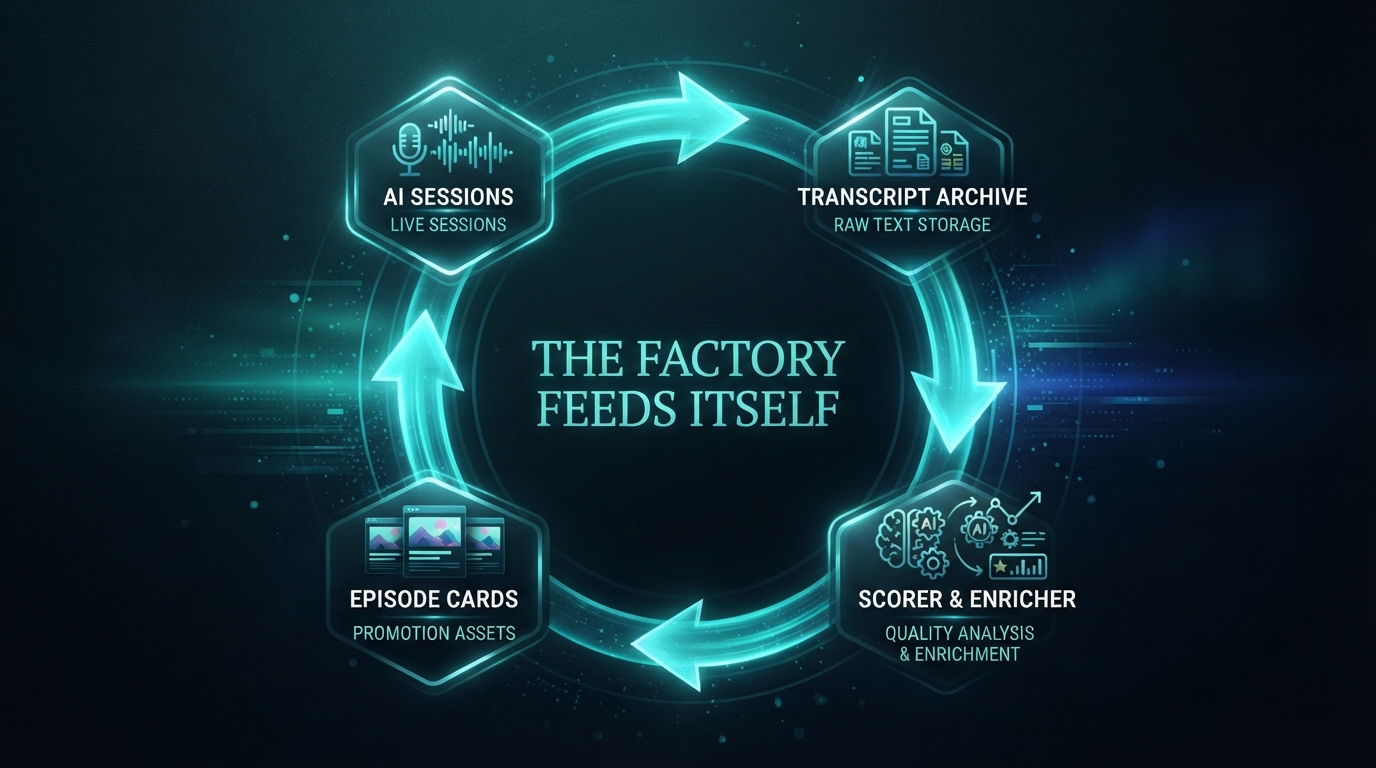
This is the loop closing. The same AI that had the conversations reads them back, finds the moments worth showing, and hands me a pre-qualified backlog — each idea already carrying the session that proves it happened. I stop hunting for episode ideas and start approving them. The system that builds the pages at night now also helps decide what the pages should be about — sourced from my own work instead of a blank page.
Sixty seconds: why the best ideas vanish mid-session, the capture script that's been quietly saving every one, the scorer that ranks the teachable moments, and the honest caveat on the numbers — then the payoff, a backlog the factory wrote for itself.
The capture script (archive every Claude Code session to disk), the teachable-moment scoring prompt (novelty / surprise / generalizability), the pipeline that turns winners into episode candidates, and a demo that runs on synthetic transcripts so you never expose your own. Everything in this episode is free and open — clone it, run it, make it yours.
gh repo clone jacobskogstrom/claude-session-miner ~/claude-session-miner && cd ~/claude-session-miner && cat README.md
No GitHub? Comment MINE on the post and the bot DMs you the link.
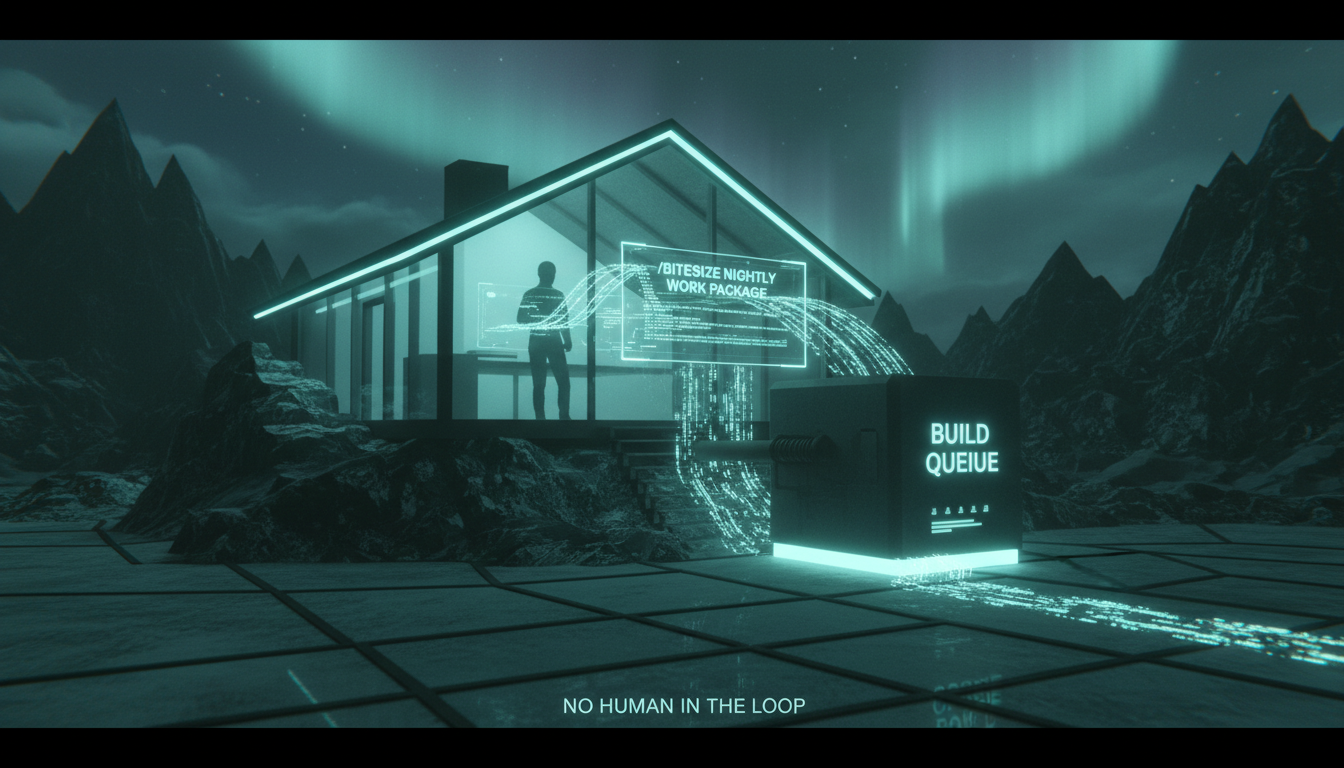
Right now I still approve each candidate by hand. Next: the scorer writes the /bitesize work package itself — story beats, assets, the lot — and drops it straight into the nightly engine. The night build then picks an idea the AI mined, framed, and queued without me. Mine → score → brief → page, end to end.