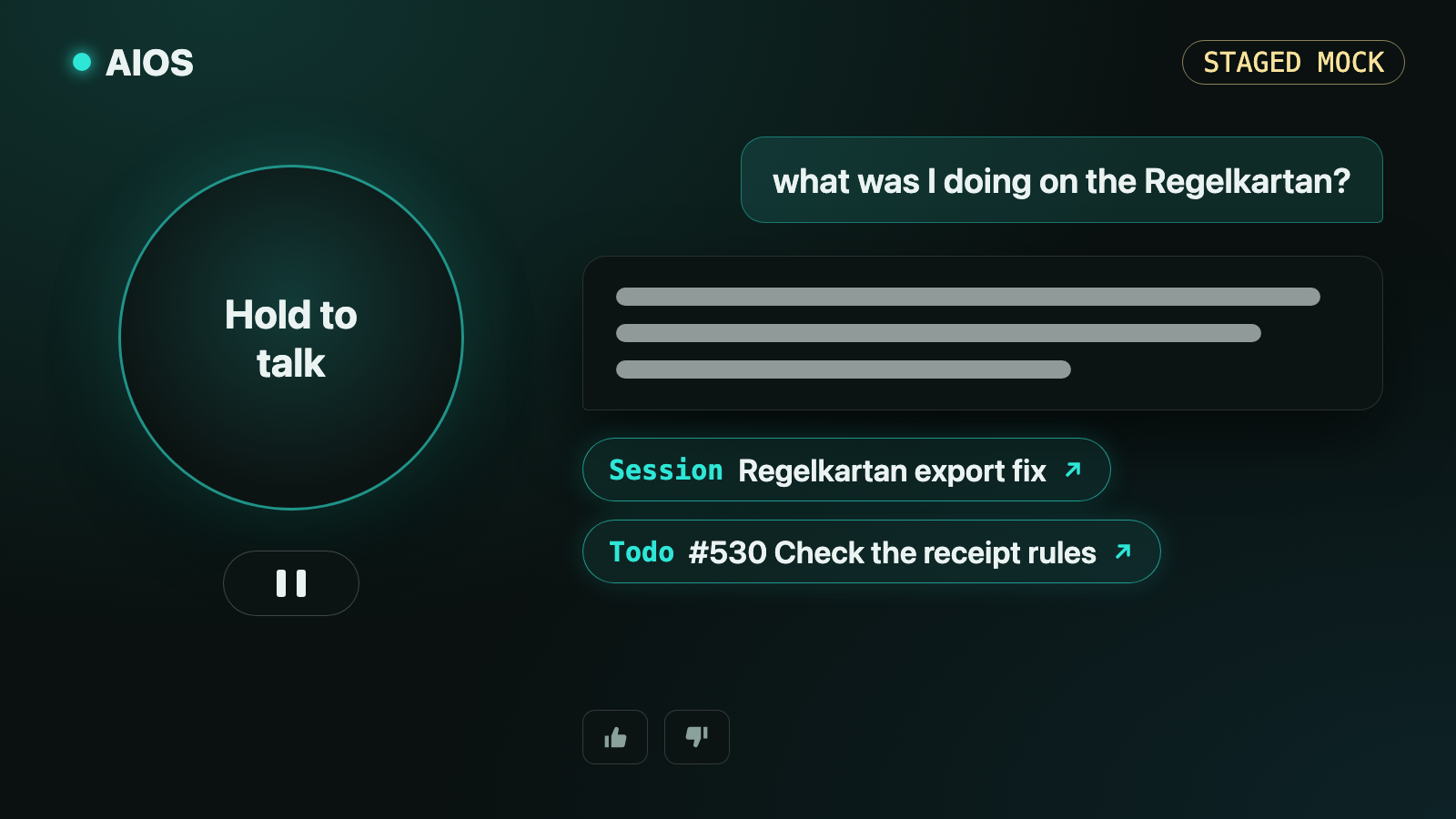
I ask “what was I doing on the Regelkartan?” and it tells me. Under the spoken answer, chips appear: the exact Claude Code session and the todo it just mentioned. One tap and I am back inside the work.

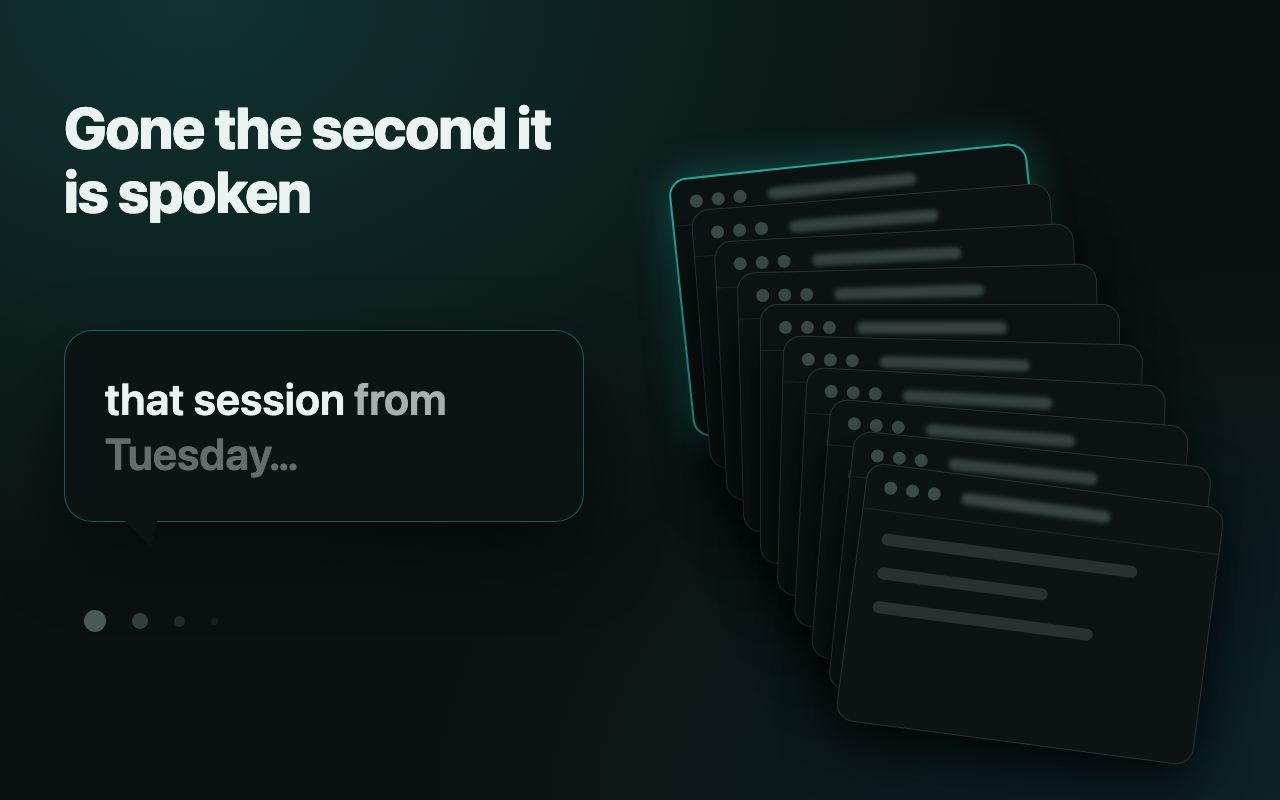
The voice assistant on my Mac mini answers from a brief of my last 48 hours: every Claude Code session, every open todo (the brief that stopped it inventing answers). The answers are good now. Then it says “the session where you were fixing the export”, the sentence is over, and I am digging through my terminals and a todo list for the thing it just named. The answer was right. It just gave me nothing to click.
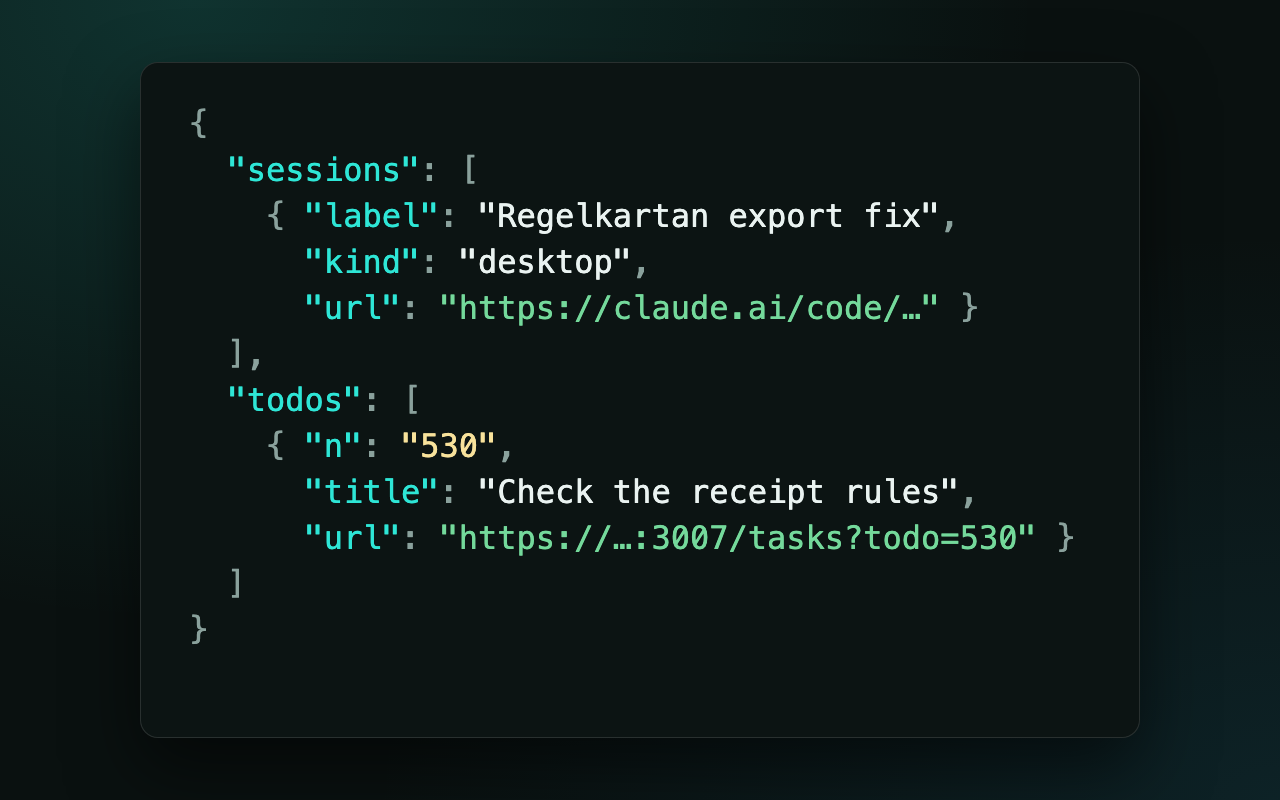
build_voice_brief.py runs on my main server, where the transcripts live. For each session it reads the transcript and keeps the newest claude.ai/code link that Remote Control wrote into it, so a desktop session opens on any device and carries on. It reads only the bytes added since the last run. A session started from Telegram links to the bot chat instead, because that is where it resumes. Every todo links to its page on my 3007 dashboard. The result is one small links.json, copied to the mini next to the brief, and only when it changed.
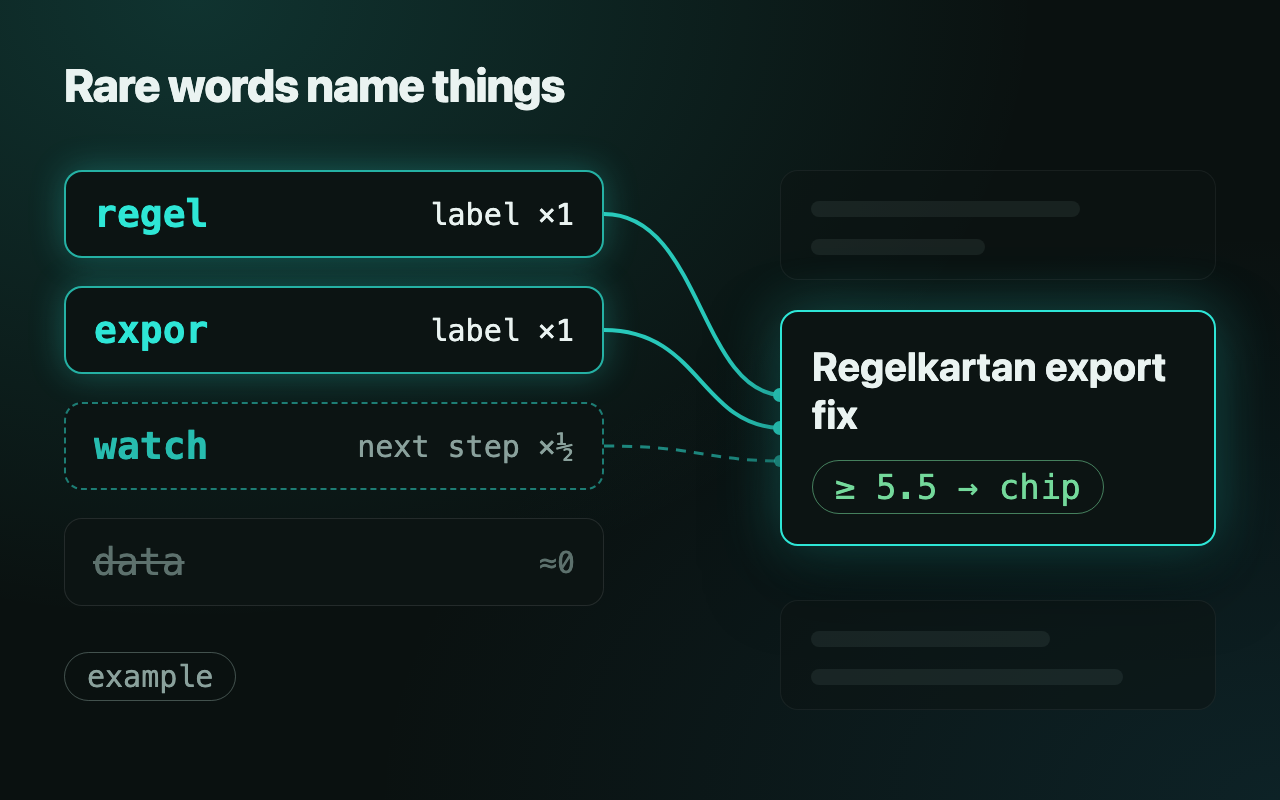
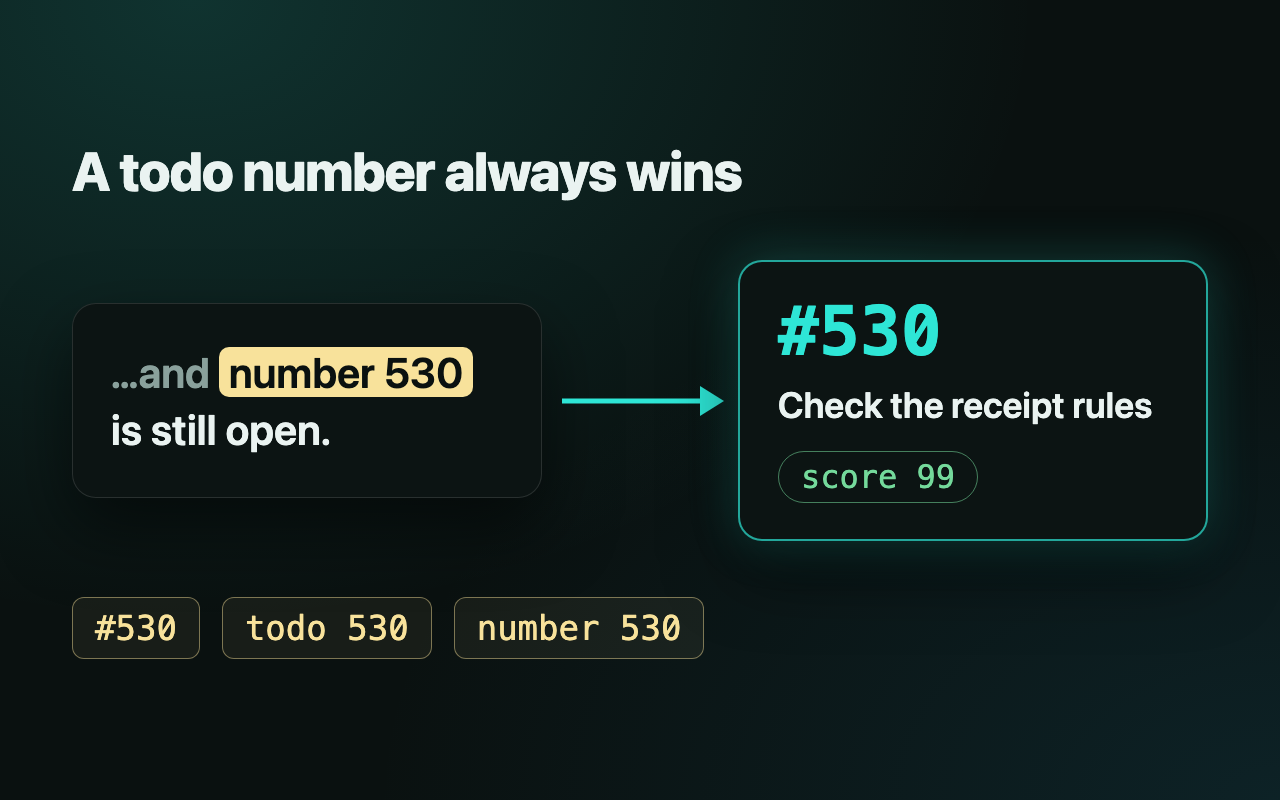
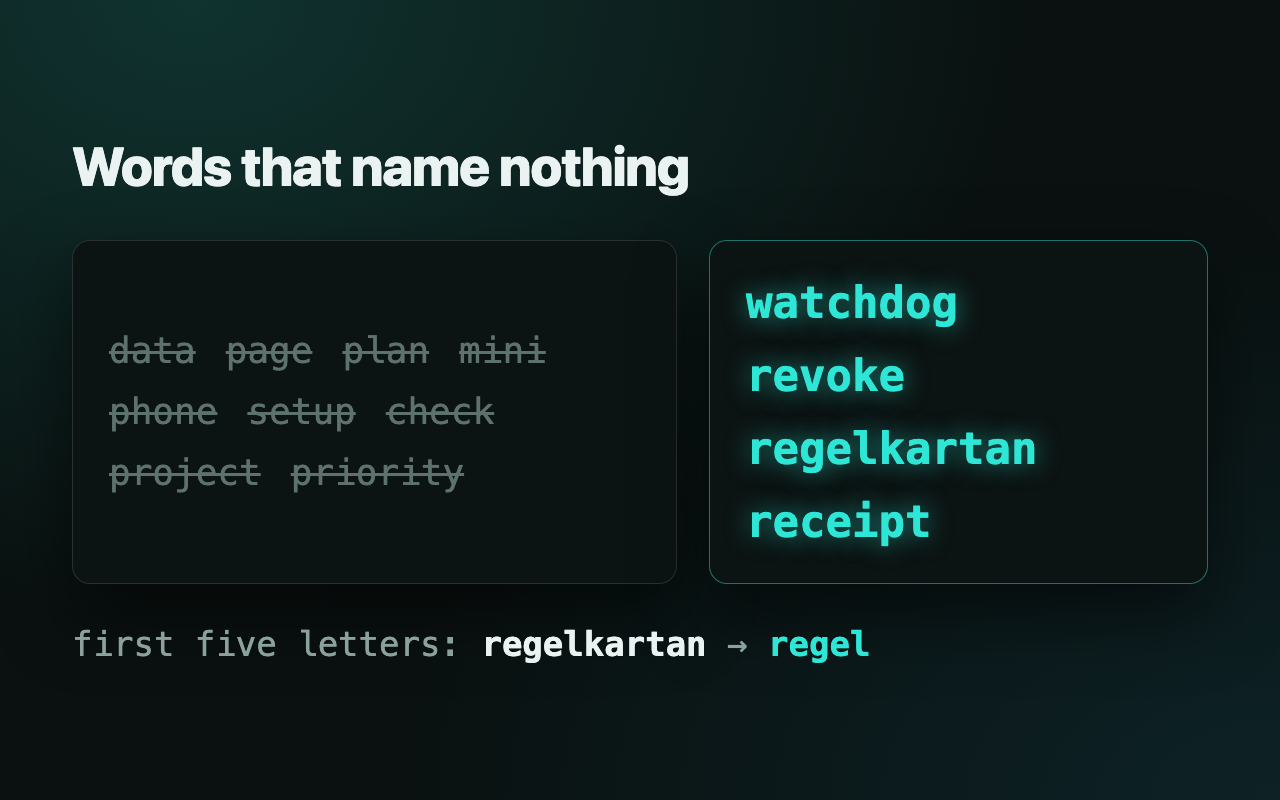
After each reply, the talk server decides which items the answer was about. A todo number wins outright: #530, “todo 530” or “number 530”. Everything else is scored sentence by sentence. A word that appears on few lines of the brief, like “watchdog” or “revoke”, points at one thing; a word on many lines, like “data”, points at nothing. So each shared word counts by its rarity (idf over the brief’s own lines), words from the session’s label count fully and words from its next step count half. It takes two shared words and a minimum score to make a chip, and four chips at most.
Each session gets a short topic label from Claude Haiku, written once by a claude -p run and cached. Those labelling runs are Claude Code sessions too, and their prompt quotes Telegram messages, so the builder filed its own housekeeping as Telegram sessions in the brief. The voice AI would have offered me chips to chats I never had. One check now marks any session that starts with the labelling prompt as automatic, not Telegram.
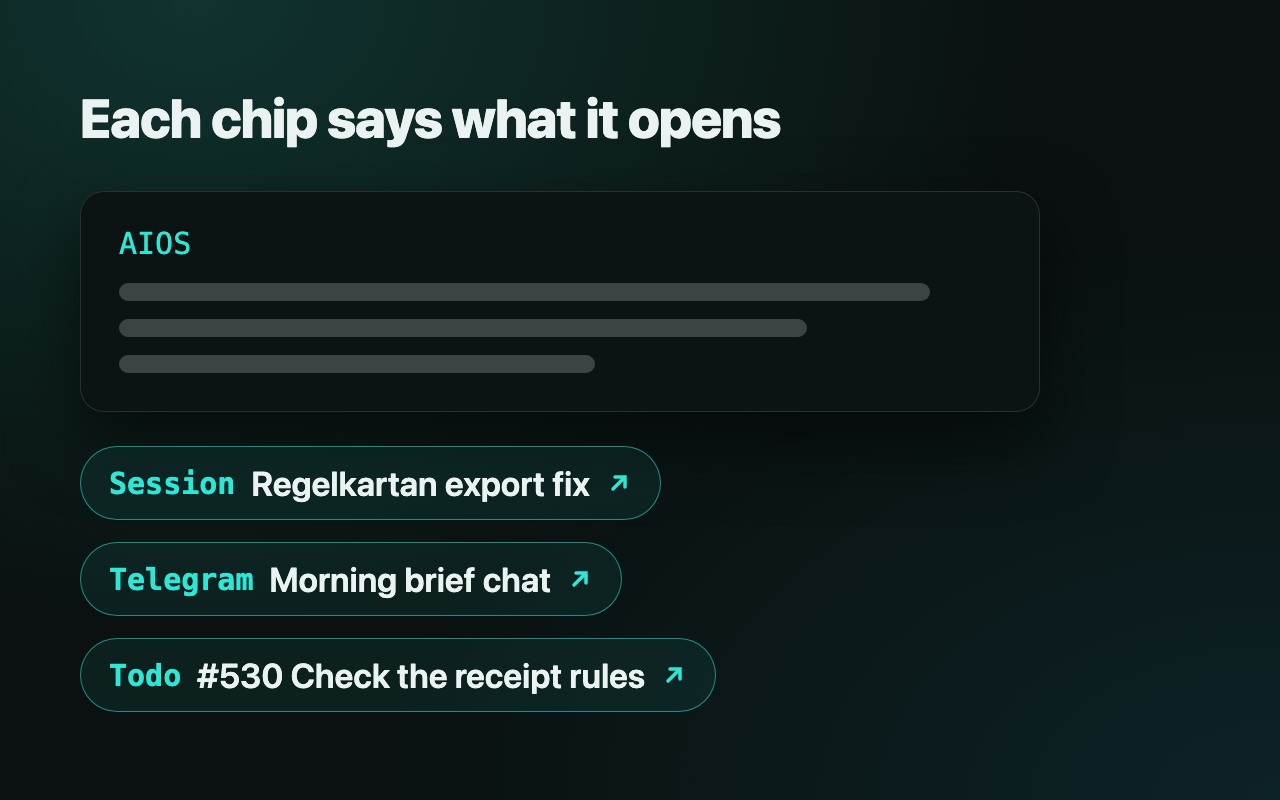
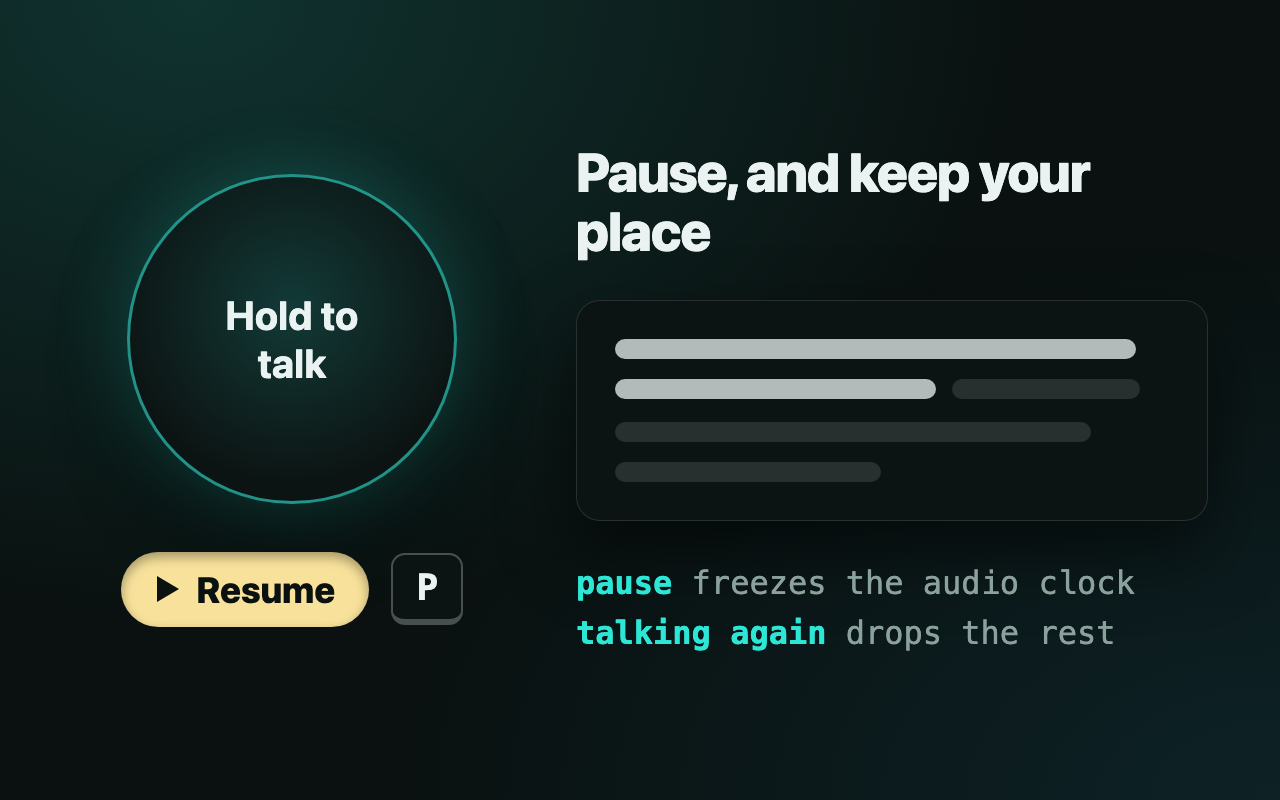
Small rules decide whether a chip feels right or random. Chips only render for https links, and each says what it opens: Session, Telegram or Todo. Everyday words that are rare in the brief but name nothing on their own sit on a stop list. And because a spoken answer can be long, there is now a pause button. Tap any image to enlarge it.


So the answer is spoken and the receipt is clickable. I ask what I was doing, I hear it in two sentences, and the chips are already there when it stops talking: the session to resume, the todo to close. Voice for the question, a link for the next move.
Pictures only: the question, the spoken answer and the chips that appear under it, in under a minute.
The pattern, not my sessions: a builder that writes a links file next to the context it gives the model, an idf matcher over the brief’s own lines that turns each reply into at most four links, and a chip row that only renders https. The model never writes a URL. Everything in this episode is free and open. The code is not published yet.